
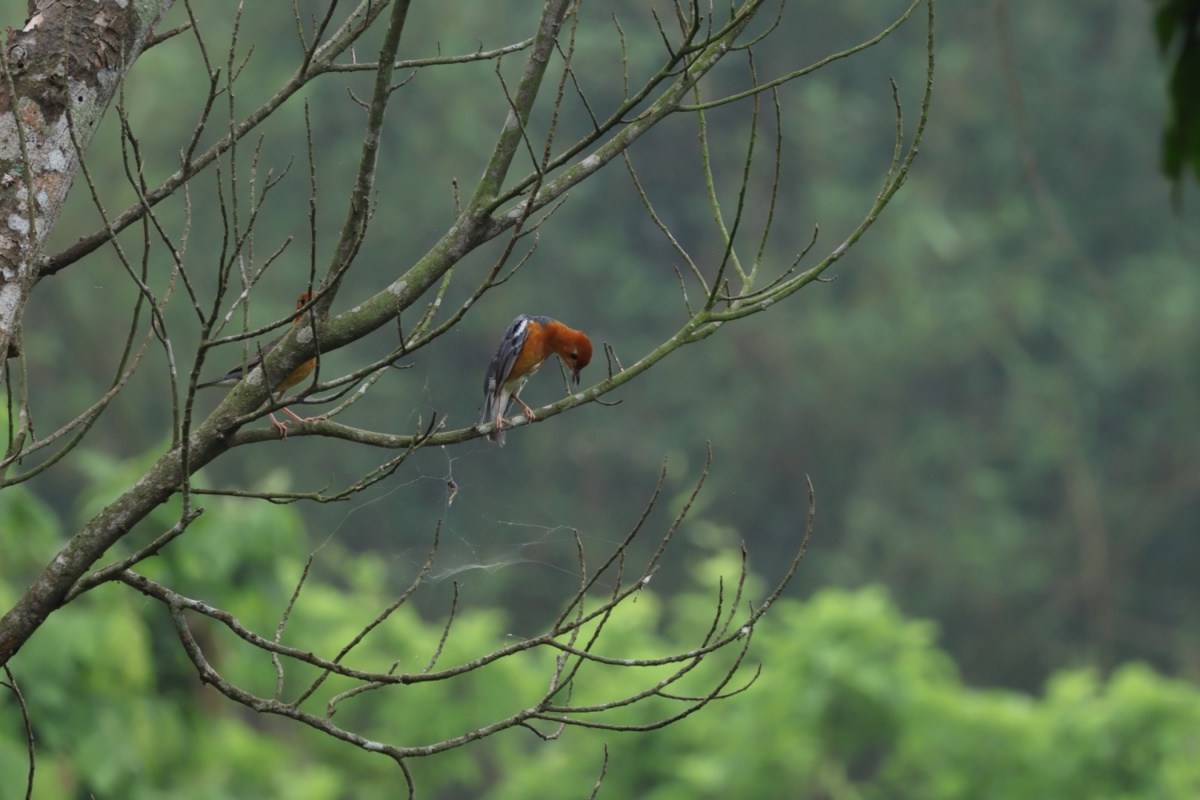
In a tropical
broadleaf forest at Ishanchandranagar, near Tripura University 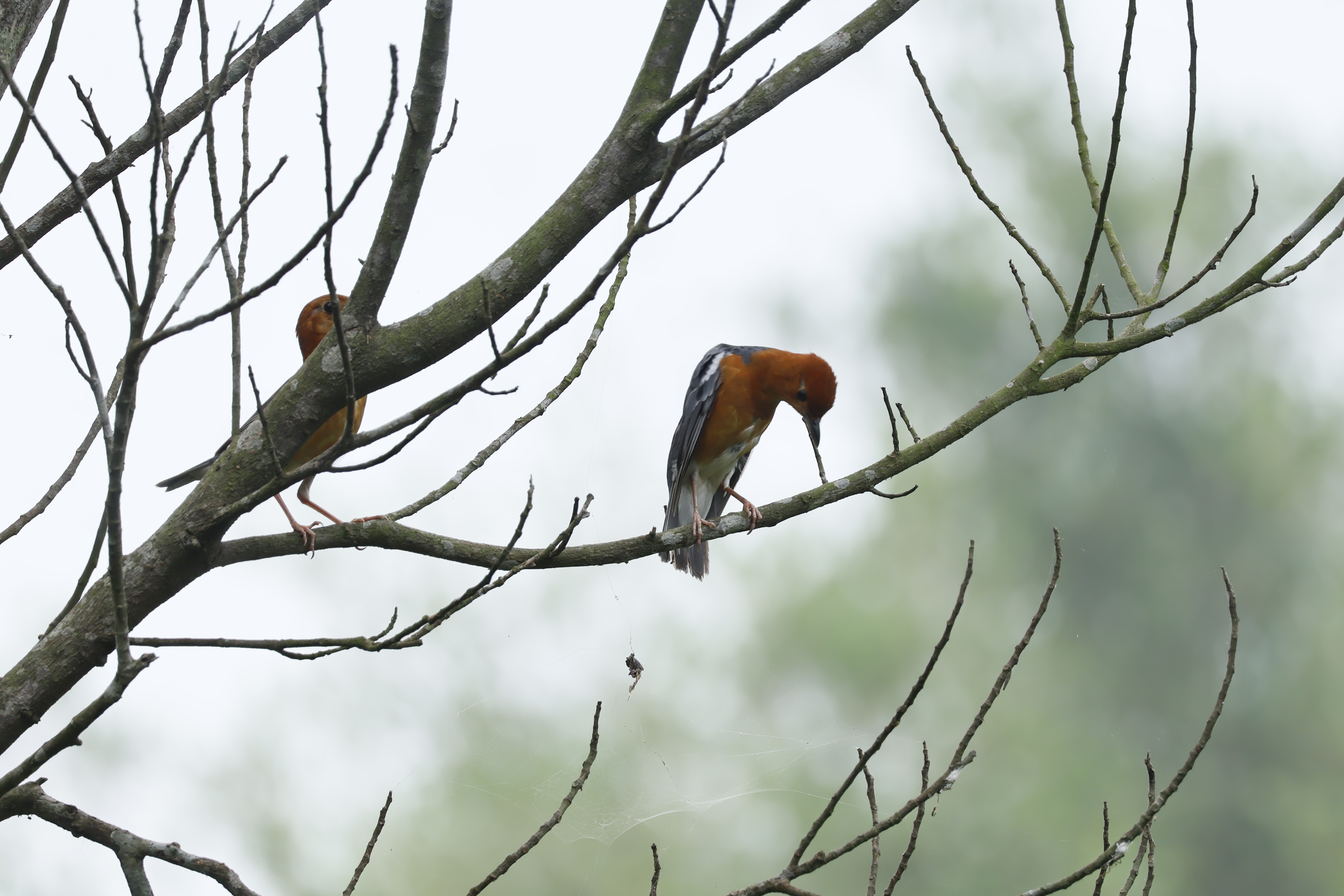 a male Orange-headed Thrush (Geokichla citrina) transforms the
canopy into a theater of high-stakes evolutionary pressure.
a male Orange-headed Thrush (Geokichla citrina) transforms the
canopy into a theater of high-stakes evolutionary pressure.
The image freezes a moment of intense psychological and physical negotiation between two individuals. While a casual observer might see a dramatic plea but a scientific lens reveals a complex interplay of signaling theory and sexual selection.
The female thrush is positioned behind a branch, a behavior known in ethology as "vantage-point concealment. The male’s dramatic, downward-arching posture—interpreted colloquially as a "suicide" display—is a textbook example of the Handicap Principle. This theory suggests that reliable signals must be costly to the signaler. He exposes his nape and vital areas, signaling to the female that he is so physically fit that he can afford to momentarily ignore his own safety. By leaning precariously off the branch, the male demonstrates superior vestibular function and muscular control.
The dense, humid canopy creates a "bokeh" effect that isn't just aesthetic; it’s a functional low-contrast environment. This ensures that the male's high-contrast orange and slate-grey feathers "pop," making his signal undeniable even in the dappled light of the forest.
This interaction is more than a romance. It is a genetic audit. The male is an avatar of Darwinian selection. If the female accepts the "Overture," it is because the male has successfully proven his quality through this performance.