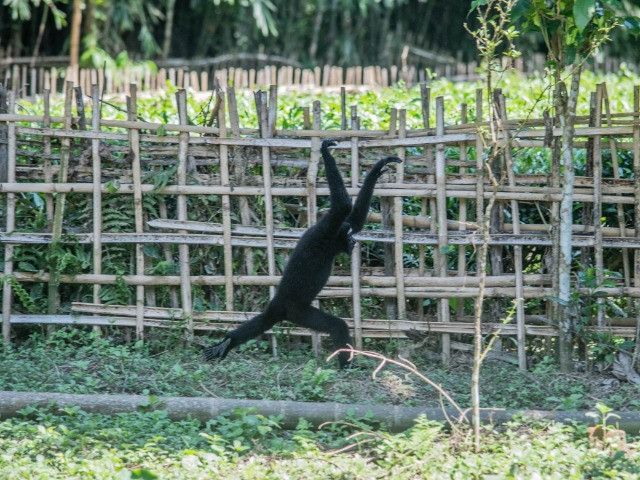

As someone from Assam, I have grown up surrounded by stories of our state’s deep cultural connection to the wild. Through my grandmother’s tales, folk songs, and age-old beliefs, I didn’t realise then how deeply these were tied not just to the natural beauty of the world but also to real conservation concerns.
Take, for example, the Hoolock gibbons—the only apes other than humans found in India. Assam is home to these majestic creatures, known for their agile brachiation, swinging effortlessly from branch to branch, rarely touching the forest floor. Highly social and vocal, they are famous for the territorial calls exchanged between mated pairs, echoing through the forest.

In the forested fringes of Upper Assam, some communities are deeply connected to them. These people can distinguish between different Hoolock cries: a territorial call, a mated pair’s exchange, and a mournful one. But what unsettles them most is the rare and ominous sight of a gibbon walking on the ground. It’s not just the act of walking that troubles them—it’s the distance. The visible journey of a gibbon walking unusually long stretches, leaving its world behind and crossing into ours. They say it’s a sign that trouble is on its way.
There are even instances where such a sighting leads to the performance of hokam: a traditional ritual of mourning and cleansing, usually performed after the passing of a person to ward off misfortune and ensure peace for the departed. In this context, hokam is conducted to repel the ill-fortune believed to be brought by the gibbon’s grounded movement. But what I didn’t realise when I first heard this story was that these beliefs quietly connect the dots between sound and sorrow, species and loss, and the unnatural habits of the wild.
Maybe the hokam is not only for grief or the foreseen misfortune, but for the forest too. Maybe it is not for what is about to happen, but for what already has: the sight of a Hoolock gibbon walking on the ground is a misfortune in itself—a sign that something is broken.
Maybe, knowingly or unknowingly, these communities acknowledge the gibbon’s sorrow, those unfamiliar cries not meant to defend, but to mourn. Being able to distinguish between the gibbon calls is an act of deep listening, a form of acknowledgement, as if saying, "We hear you." They are responding, through stories and rituals, to the change—speaking back to the forest in the only language they know.
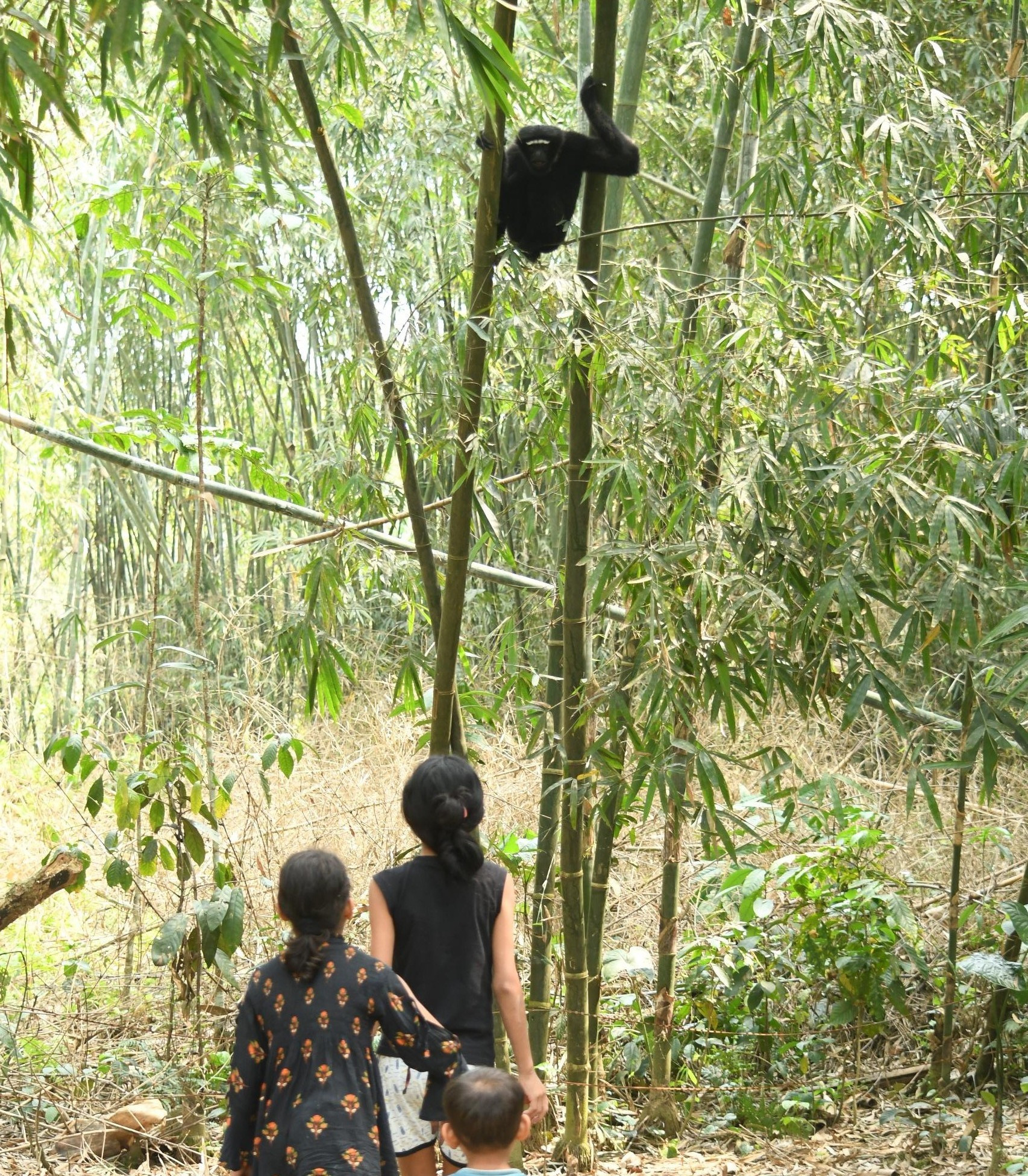
They may not use ecological terms like habitat fragmentation or wildlife corridors, but their beliefs carry the same truths. In these ancient folklores, they remind us that this is not how things are meant to be. Something has shifted. And through stories, songs, and silence, they urge us to notice, to listen, and to act.
Photo credits: Photo credit: Ishika Ramakrishna and Luja Guju